
Getting visitors to your website is just the first step. Many people may read your content or look at your products without being ready to buy. Email marketing lead generation helps you turn these visitors into email subscribers so you can stay connected with them.
For example, a visitor might read one of your blog posts and leave without making a purchase. You can offer a free guide, checklist, or other useful resource in return for their email address. This gives you a chance to stay in touch and share more helpful content through email.
But getting more email addresses isn’t the main goal. You want to attract people who are actually interested in what your business offers.
In this guide, we’ll cover simple email marketing lead generation strategies for 2026, including lead magnets, signup forms, landing pages, segmentation, automation, lead nurturing, and important metrics to track.
What Is Email Marketing Lead Generation?
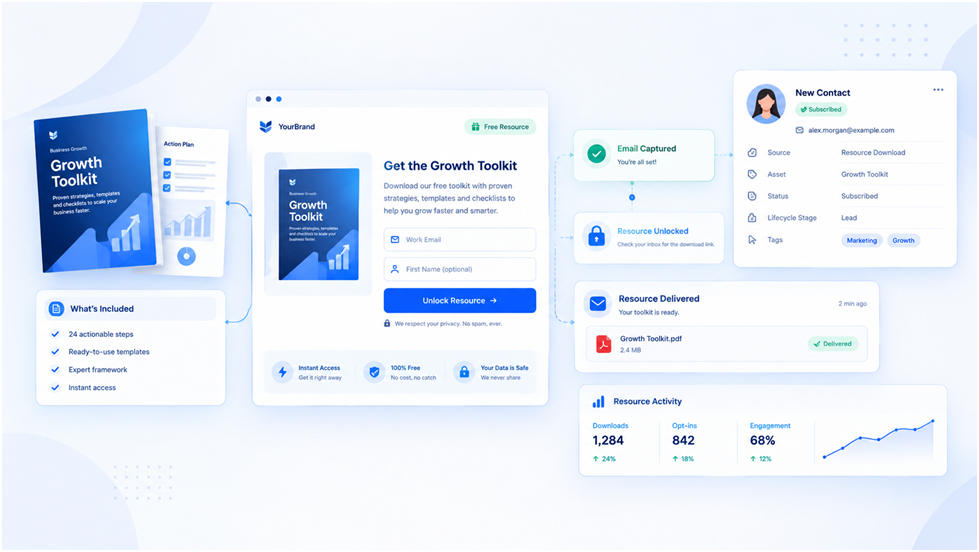
Email marketing lead generation is the process of attracting potential customers and getting them to share their email addresses. This lets you build an audience you can stay connected with over time. To get people to subscribe, give them something valuable, such as a helpful guide, a special discount, or free content that meets their needs.
For example, a company selling WordPress security software could publish a guide on WordPress security and offer a free security checklist in exchange for an email address. The person downloading it has already shown interest in the topic, making them a relevant lead for future emails.
Lead Generation vs Email Marketing
Lead generation and email marketing are connected, but they have different purposes. Lead generation helps you collect potential customers, while email marketing helps you stay in touch with those customers.
What Is Lead Generation?
Lead generation is the process of getting contact information from people who may be interested in your business. You can collect leads through forms, landing pages, free downloads, ads, and other methods.
For example, someone may enter their email address to download a free guide from your website. That person is now a lead, and you can contact them later.
What Is Email Marketing?
Email marketing lets you stay in touch with people who subscribe to your list. You can share newsletters, useful tips, company updates, special offers, and follow-up messages through email. It can also help you stay connected with people who are interested in your business but are not ready to buy yet.
How Do They Work Together?
Lead generation usually comes first. You attract visitors and give them a reason to share their contact information. You can follow up with these leads through email and keep them engaged with useful content and updates.
For example, a visitor may download a free resource from your website and join your email list. You can then send useful emails and product information to build the relationship.
Which One Do You Need?
Most businesses benefit from using both. Lead generation brings new people to your email list, and email marketing helps you stay connected with them.
In simple terms, lead generation is about getting leads, while email marketing is about staying connected with those leads and turning them into customers.
How Does Email Marketing Generate Leads?
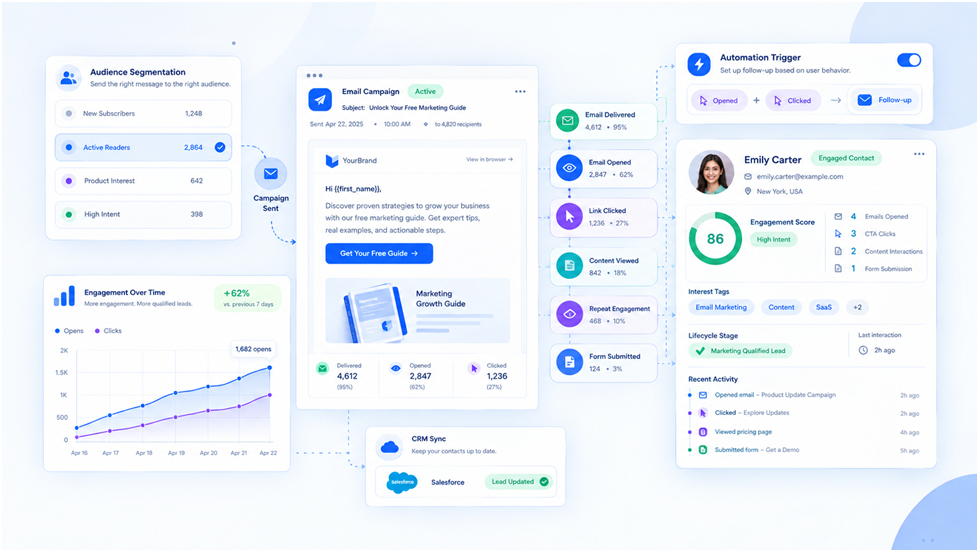
Start by reaching people who may be interested in your products or services. You can attract them through blogs, SEO, social media, ads, or webinars. Once they visit your website, give them a good reason to share their email address.
A useful guide, template, webinar, free tool, discount, or product demo can work well when it matches what the visitor needs. Your signup form should also be simple and clearly explain what they will receive.
After someone signs up, deliver what you promised and start building the relationship. A welcome email can introduce your business, while a series of useful emails can keep subscribers engaged and move interested prospects toward a product, service, demo, or consultation.
As subscribers interact with your emails and website, you can learn more about their interests and use that information to send more relevant content and offers. The quality of your offer often matters more than simply placing your signup form in more places.
What Is an Email Lead Magnet?
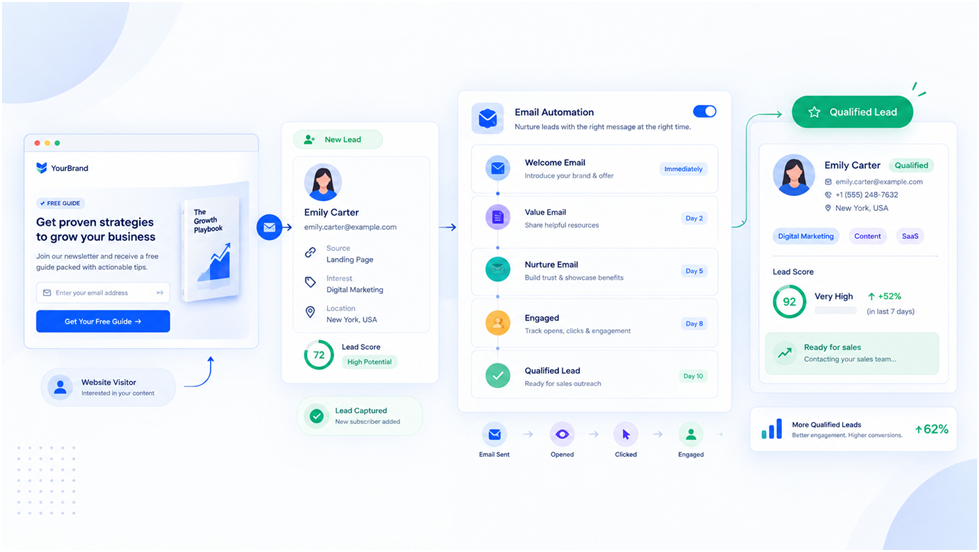
An email lead magnet is something useful you offer in exchange for a visitor’s email address. It gives people a clear reason to join your email list.
The idea is simple: people share their contact information when they believe what you’re offering is worth it. A lead magnet could be an ebook, checklist, template, guide, webinar, free course, case study, calculator, discount, consultation, or demo.
The format matters less than the value and relevance. A useful resource that solves a specific problem can work much better than a generic “Subscribe to Our Newsletter” message.
For example, a website that publishes content about website speed could offer a WordPress Speed Optimization Checklist. It directly matches what the visitor is already interested in, making the signup more relevant.
How to Choose a Lead Magnet?
Start with your audience’s problems. What are they trying to do, and what useful information could you give them to help solve it?
Offer something that solves a specific problem. A simple checklist or guide for one task may be more helpful than a long resource covering too many topics.
It should also connect naturally with your products or services. For example, someone downloading a WooCommerce optimization checklist may be more interested in a related WooCommerce service.
Finally, give people what you promised. If you offer an instant download, make sure they can access it immediately after signing up.
Best Email Marketing Lead Generation Strategies for 2026
Email lead generation can work differently for each business. Test a few methods and focus on the ones that bring the best results for your audience.
1. Create Targeted Lead Magnets
Offer something useful that matches what your visitors are looking for. For example, someone reading about email automation could get an automation checklist, while someone learning about lead forms could get a form optimization guide.
2. Add Signup Forms in the Right Places
Add signup forms to pages where visitors are already interested in your products or services. Good places include blog posts, product pages, service pages, pricing pages, and landing pages. Make sure the offer matches the content they are viewing.
3. Use Content Upgrades
Give readers an extra resource related to the article they are reading. For example, a post about website speed could offer a free speed optimization checklist. This gives readers a clear reason to join your email list.
4. Create Dedicated Landing Pages
Create a separate landing page for important lead magnets and offers. Explain what visitors will get, show the main benefits, and add a simple signup form. Keep the page focused on one main action.
5. Try Exit-Intent Popups
An exit-intent popup can show an offer when someone is about to leave your website. Offer something useful, such as a free guide, discount, or consultation. Keep the popup simple and avoid showing it too frequently.
6. Use Scroll or Time-Based Forms
You don’t have to show a signup form as soon as someone visits your page. You can show it after they scroll through part of an article or spend some time on the page.
7. Promote Your Newsletter
Tell visitors what they will get by joining your newsletter. You could offer weekly tips, new guides, product updates, or useful tutorials. Also mention how often you send emails when it helps set expectations.
8. Use Quizzes and Interactive Tools
Quizzes, calculators, and other interactive tools can help attract leads. For example, a hosting website could create a quiz that helps visitors choose the right hosting plan. Ask for their email address if they want to receive the results.
9. Host Webinars
Webinars are a good way to connect with people interested in your topic. Tell them what they will learn and make registration easy. After they sign up, send reminder emails and follow up with useful information.
10. Offer Free Tools
Free tools can attract visitors who need help solving a specific problem. You could offer a calculator, checker, generator, or assessment and ask for an email address to send the results.
11. Offer Ecommerce Discounts
Offer discounts to encourage people to subscribe to your email list, but don’t rely on them too much. Use them carefully so customers don’t start waiting for a coupon before buying. You can also offer early access, product updates, or useful buying guides.
12. Use Content Marketing
Create useful blog posts, guides, tutorials, and comparisons to attract the right visitors. Then offer a related resource. For example, a visitor reading about WordPress security may be interested in a security checklist.
13. Send Paid Traffic to Landing Pages
Send visitors from Google Ads, social media ads, or other paid campaigns to a focused landing page. Make sure the landing page matches the message in the ad so visitors immediately understand the offer.
14. Use Social Media
Promote your lead magnets, newsletters, webinars, and free tools on social media. Send interested visitors to a dedicated signup page instead of trying to collect all the information inside the social post.
15. Use Referrals and Partnerships
Ask partners, affiliates, or existing customers to share your useful resources with their audiences. This helps you connect with people who are already interested in your industry. Make sure your signup process also follows the applicable privacy and consent requirements.
Where Should You Place Email Signup Forms?
The best place for an email signup form depends on the page and what visitors are looking for. Place it where people are likely to be interested in your offer, so signing up feels like a natural next step rather than a distraction.
On the homepage, you can promote a newsletter, free resource, discount, or general offer because visitors are still learning about your business. On a blog post, an inline form or content upgrade can work better because you already know what the reader is interested in.
The sidebar can keep a signup form visible while visitors read your content, although sidebars are often less noticeable on mobile. A footer is another simple option that gives visitors a chance to subscribe after they finish reading a page.
For product, service, and pricing pages, match the signup offer with the visitor’s intent. Someone who isn’t ready to buy may be interested in a product guide, demo, consultation, or notification about future offers.
Exit-intent popups can give visitors one last reason to subscribe before leaving your site. Use them alongside other signup methods and offer something related to the page they are viewing.
How to Create a High-Converting Email Signup Form?
A signup form should clearly explain what visitors will receive and how they can get it. If the benefit isn’t clear, people may leave without signing up, even if the form looks good.
Ask for only the details you need. For a newsletter, an email address may be enough. A B2B form may also need a company name or business requirements. Keep extra fields to a minimum to make signup easier.
Use clear CTA text instead of a generic button like “Submit.” Phrases such as “Get the Free Guide” or “Send Me the Template” tell visitors what they will receive. You should also explain what happens after they sign up.
Make sure the form works well on mobile devices, with readable fields and easy-to-tap buttons. Keep it quick to complete, and explain how subscriber information will be used. Include consent details where required.
Email Lead Generation Funnel
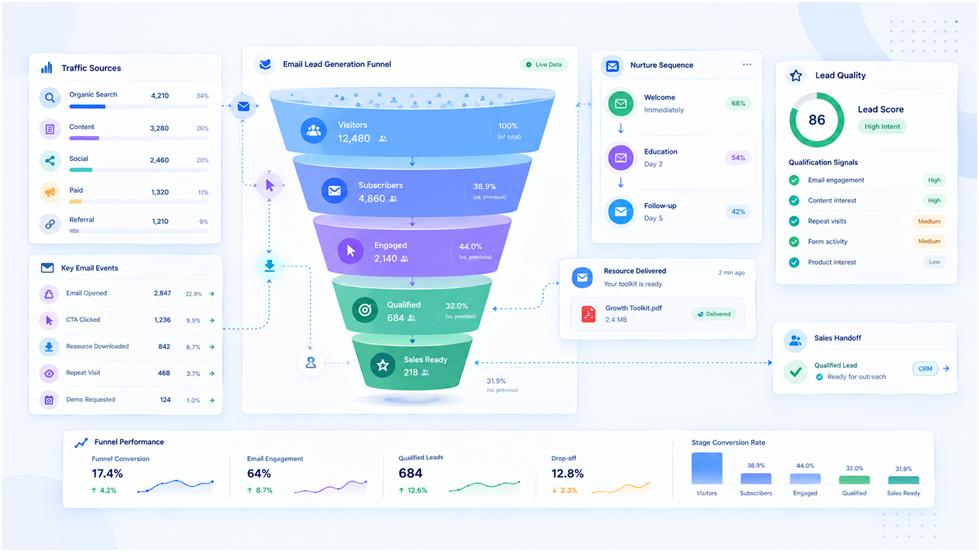
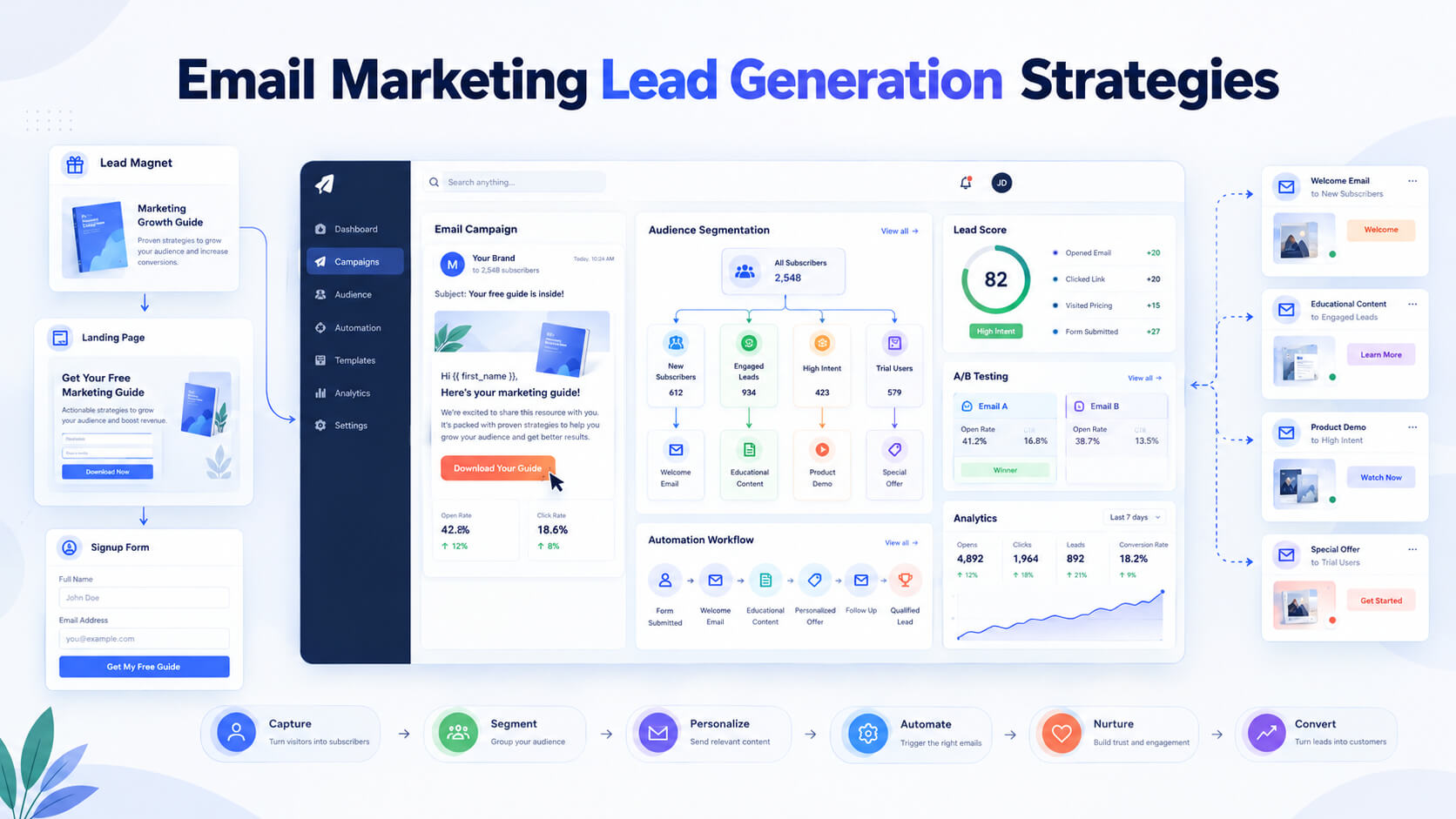
An email lead generation funnel takes a visitor from their first interaction with your business to becoming a subscriber and, eventually, a customer. A simple journey can include traffic, a landing page, a lead magnet, signup, a welcome email, a nurture sequence, and an offer.
The first step is attracting relevant visitors through SEO, content marketing, paid advertising, social media, partnerships, or other channels. Once they arrive, give them a useful reason to share their email address and make the signup process simple.
Once someone signs up, send them the promised resource and a welcome email. Instead of pushing a sale right away, share helpful content over the next few emails and gradually introduce your business.
The nurture stage is where you build the relationship. Share helpful content, answer common questions, and introduce products or services that match the subscriber’s interests. When someone shows stronger buying intent, you can guide them toward a purchase, demo, consultation, booking, or trial.
The funnel can continue after the first conversion. Email can help with onboarding, customer education, repeat purchases, and retention, making it useful beyond the initial lead-generation stage.
How to Measure Email Lead Generation?
Subscribers have different needs and levels of interest. Someone who downloads a beginner’s guide may still be learning, while someone who books a product demo may be closer to buying.
This is where email segmentation becomes useful. You can group subscribers based on how they joined your list, which lead magnet they downloaded, what products interest them, their website activity, email engagement, purchase history, or where they are in the funnel.
For B2B businesses, details like industry, company size, job role, and business needs can also help. This makes it easier to send relevant emails instead of sharing the same content with everyone.
You don’t need dozens of complicated segments. Start with a few meaningful groups that actually change the type of content or offers you send.
Email Automation for Lead Nurturing
Email automation lets you send emails based on what subscribers do, without having to send each message yourself. It saves time and helps you stay in touch with leads regularly.
For example, new subscribers can receive a welcome email automatically. Someone who downloads a guide can get related content, while webinar registrants can receive event reminders and follow-up emails.
You can also automate abandoned-cart reminders, product suggestions, onboarding emails, and post-purchase messages. Focus on automations that match subscribers’ actions and interests.
Automation should still feel relevant and timely. Avoid sending the same sequence to everyone when their interests or actions are clearly different.
Example Lead Nurturing Sequence
You can start with a simple email sequence. On Day 1, send the promised resource and welcome the subscriber. On Days 2–3, share a helpful tip. On Days 4–5, answer a common question or explain how to solve a problem. By Days 6–7, introduce a product or service that may be useful to them.
After that, you can continue sending useful content and targeted offers based on the subscriber’s interests. This is only a starting point, so adjust the timing and number of emails to match your audience and buying cycle.
Email Lead Qualification
Not every new subscriber is ready to buy. Some sign up just to get a free resource, while others may already be looking for a product or comparing options. Watch how subscribers interact with your emails and website to spot those who are more likely to make a purchase.
Someone who repeatedly visits your pricing page, clicks product links, downloads several related resources, requests a demo, or starts a trial may show more interest than someone who only downloaded one introductory guide.
B2B companies can also use relevant information such as company size, industry, role, or business needs to help the sales team understand which leads deserve more attention.
The qualification process should match your sales cycle. A business selling a low-cost product may need a simple process, while a company with a longer B2B sales cycle may need more detailed qualification.
How to Improve Email Lead Generation Conversion Rates?
Start by checking whether your offer matches the visitor’s intent. A person reading about WordPress security is more likely to respond to a security checklist than a generic marketing ebook.
Your signup copy should quickly explain what visitors get and why it is useful. A clear headline, short description, and relevant CTA can make the value easier to understand.
Keep your landing page fast, mobile-friendly, and focused on getting visitors to sign up. Remove unnecessary elements that could distract them from the main goal.
Try different headlines, offers, CTA wording, form positions, and layouts to find what works best. Track conversion rates to make decisions based on real results instead of guesswork.
Finally, follow up quickly after signup. If someone requested a guide or checklist, deliver it as promised and use the next emails to continue providing useful information.
How to Measure Email Lead Generation?
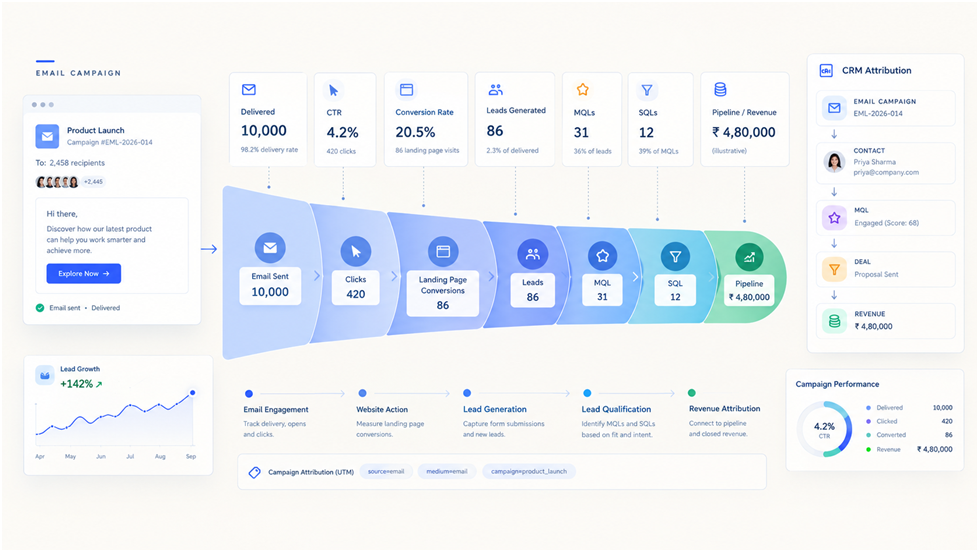
The number of new subscribers is useful, but it doesn’t tell you the whole story. Start by tracking subscriber growth and your signup conversion rate to understand how well your website turns visitors into leads.
If you’re using paid advertising, track cost per lead to see how much you’re spending to acquire each subscriber. You can then compare this with the quality of those leads and how many eventually become customers.
The lead-to-customer rate is particularly useful because a campaign can generate thousands of subscribers without generating many sales. Email engagement, unsubscribes, and spam complaints can also help you spot problems with your content or email frequency.
If you can connect leads with actual revenue, revenue per lead can give you an even clearer picture of the business value of your email marketing efforts.
Email Lead Generation vs Other Lead Generation Channels
Email marketing works well alongside other channels. Social media can help you reach new audiences, while email gives you a direct way to continue communicating with people who choose to subscribe.
SEO can bring visitors who are actively searching for information, while email gives you a way to stay connected after they leave your website. Paid advertising can send targeted traffic to a landing page, where you can turn some of those visitors into email leads.
Chat and other website tools can also capture leads while someone is actively browsing. Email can then provide a longer-term way to educate and nurture those leads.
The goal is not to make email work separately from everything else. Connect your channels so each one supports the same customer journey.
How to Measure Email Lead Generation?
Buying email lists is one of the biggest mistakes you can make. These contacts may not have agreed to receive your emails, which can lead to poor engagement and deliverability problems.
A weak or unclear offer can also reduce signups. Instead of simply asking visitors to “Join our newsletter,” explain what they will receive and why it is useful. A specific lead magnet often gives people a stronger reason to subscribe.
Long forms can create unnecessary friction, while aggressive popups can make the website harder to use. Keep forms short and use popups carefully, especially on mobile.
Don’t turn every new subscriber into an immediate sales opportunity. Deliver what you promised first, then build the relationship with useful and relevant content.
Finally, check your technical setup regularly. Make sure your forms work, emails are configured correctly for deliverability, conversion tracking is active, and subscribers have a clear way to unsubscribe.
How to Build an Email Lead Generation Strategy?
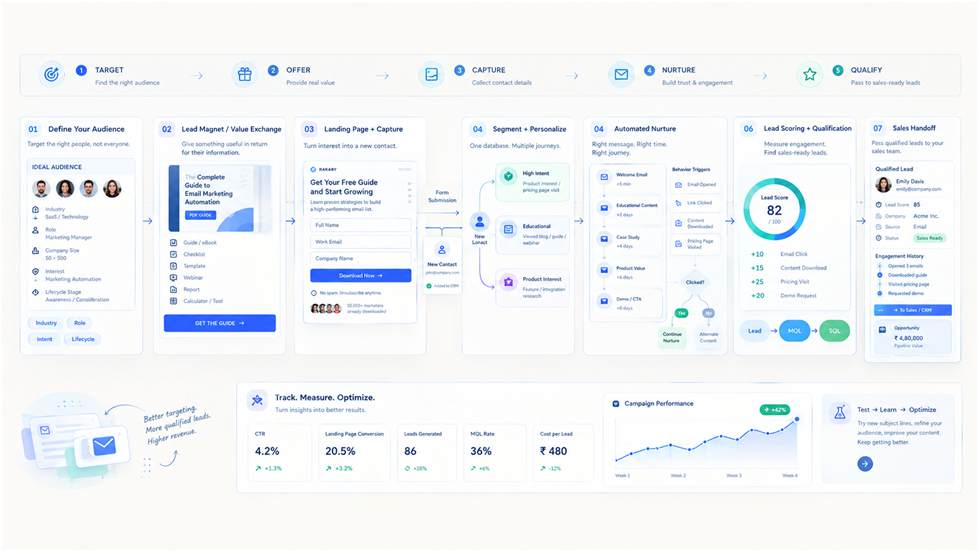
If you’re starting from scratch, don’t try to build every possible campaign at once.
Begin by defining your target audience and identifying one specific problem you can help them solve. Turn that problem into a useful lead magnet and create a focused signup page or form around it.
Next, choose the main sources of traffic for your landing page. This could be one or two channels that already work for your business rather than every possible traffic source.
Connect your form to your email marketing platform and create a simple welcome sequence. Make sure the promised resource is delivered immediately and the next emails provide useful information.
Once your basic setup is working, group subscribers based on their interests and actions. This helps you send more relevant emails, follow-up messages, and offers.
Track the entire process, from signups and email engagement to qualified leads and paying customers. Use these results to improve your offers, landing pages, signup forms, and follow-up emails.
Final Thoughts
Effective email marketing lead generation isn’t about adding signup forms everywhere. It starts with understanding what your audience wants and giving them a good reason to subscribe.
Offer something useful, make the signup process simple, and clearly explain what subscribers will receive. Once they join your list, keep your promise and send useful, relevant content instead of filling their inbox with unnecessary emails.
As your list grows, segmentation and automation can help you send more relevant messages to different groups. You can also track your results to see which lead magnets, pages, and campaigns are bringing in valuable leads.
In the end, focus on the quality of your email list, not just its size. A smaller list of people who are genuinely interested in your business can be more valuable than a large list of people who aren’t.
FAQs
1. What is email marketing lead generation?
Email marketing lead generation means collecting email addresses from potential customers and building relationships with them through relevant emails and offers.
2. How can I generate leads through email marketing?
Offer something valuable in exchange for an email address, then send useful content, follow-up emails, and relevant offers to turn subscribers into customers.
3. What is the best lead magnet for email marketing?
The best lead magnet depends on your audience’s needs. Guides, checklists, templates, webinars, free tools, discounts, and product demos are all useful options.
4. How can I build an email list?
Create signup forms and landing pages that offer something valuable. You can also collect subscribers through webinars, content upgrades, free tools, and other relevant resources.
5. How do I measure the success of email lead generation?
Track signup rates, lead quality, email engagement, conversions, and revenue per lead. Also monitor unsubscribes and spam complaints to identify areas that need improvement.